 MISSION STATEMENT
Our mission is to empower women and girls by providing practical Ju-Jitsu training, education, and community support that strengthen self-protection, confidence, and resilience, while advancing gender equality and preventing violence worldwide.
PROJECT SUMMARY
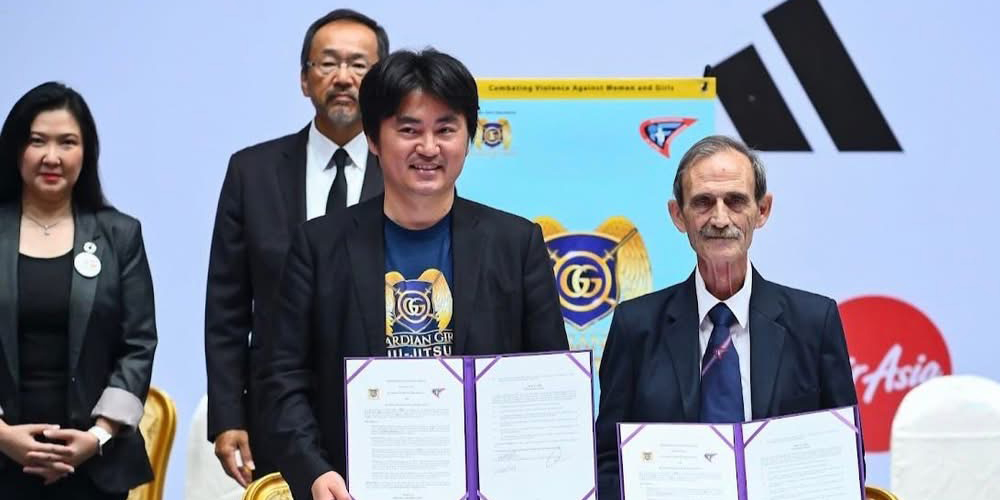 GGI Chair Shin Koyamada and JJIF President Panagiotis Theodoropoulos signing the MOU on November 4, 2025 in Bangkok, Thailand.
Guardian Girls Ju-Jitsu (GGJJ) is a global initiative of Guardian Girls International (GGI) developed in partnership with the Ju-Jitsu International Federation (JJIF) to empower women and girls, advance gender equality, and prevent violence through the discipline of Ju-Jitsu.
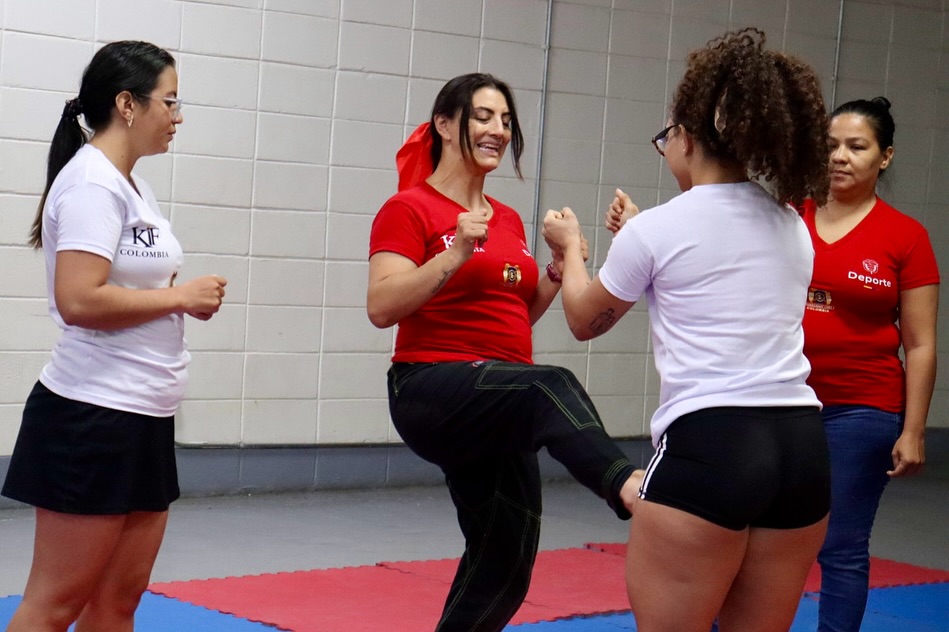
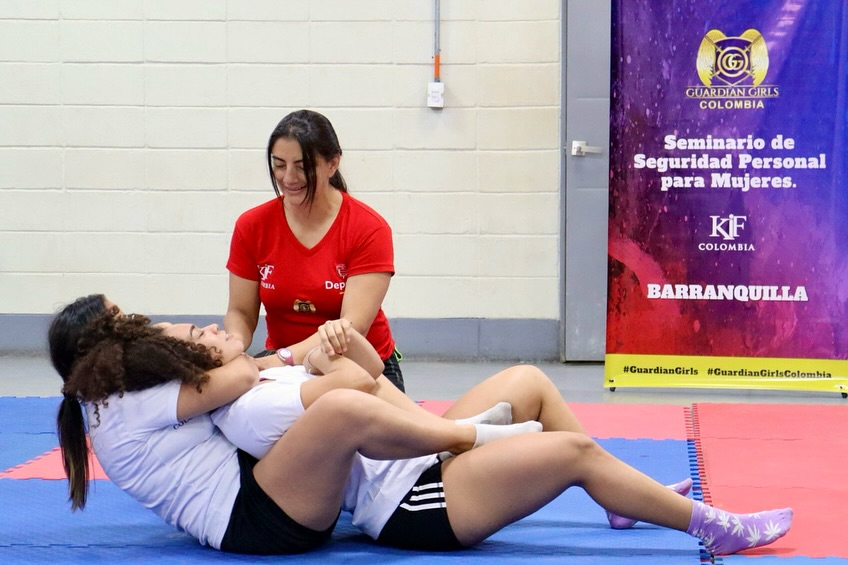
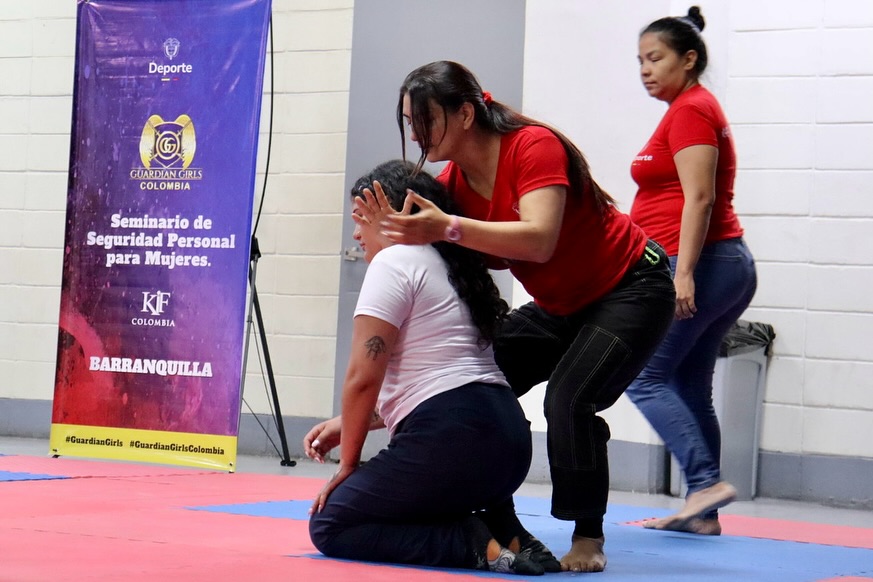
Built on the core principles of the martial art—technique over strength, leverage over force, and strategy over aggression—GGJJ equips women and girls with practical skills to stay safe, confident, and resilient in their daily lives. The project combines professional Ju-Jitsu training, self-defense education, and community awareness efforts delivered through certified female instructors from JJIF and its continental and national federations.
GGJJ operates through a structured global framework that includes:
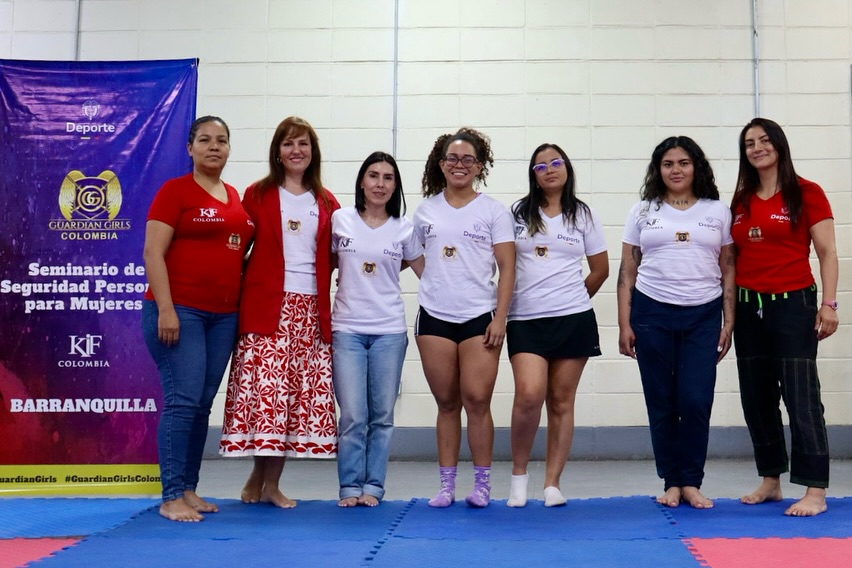
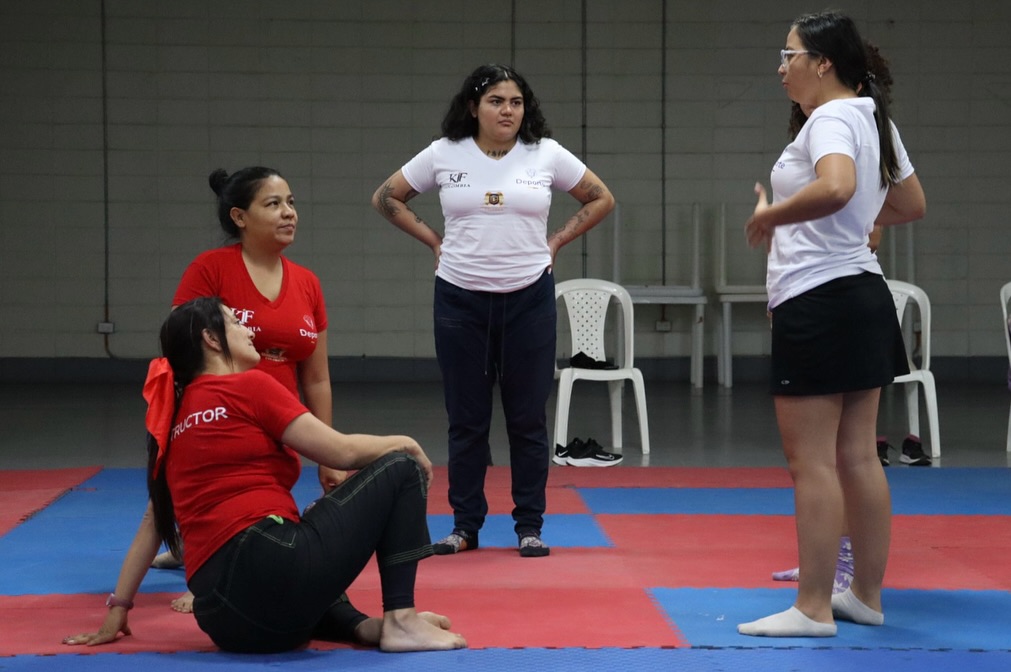
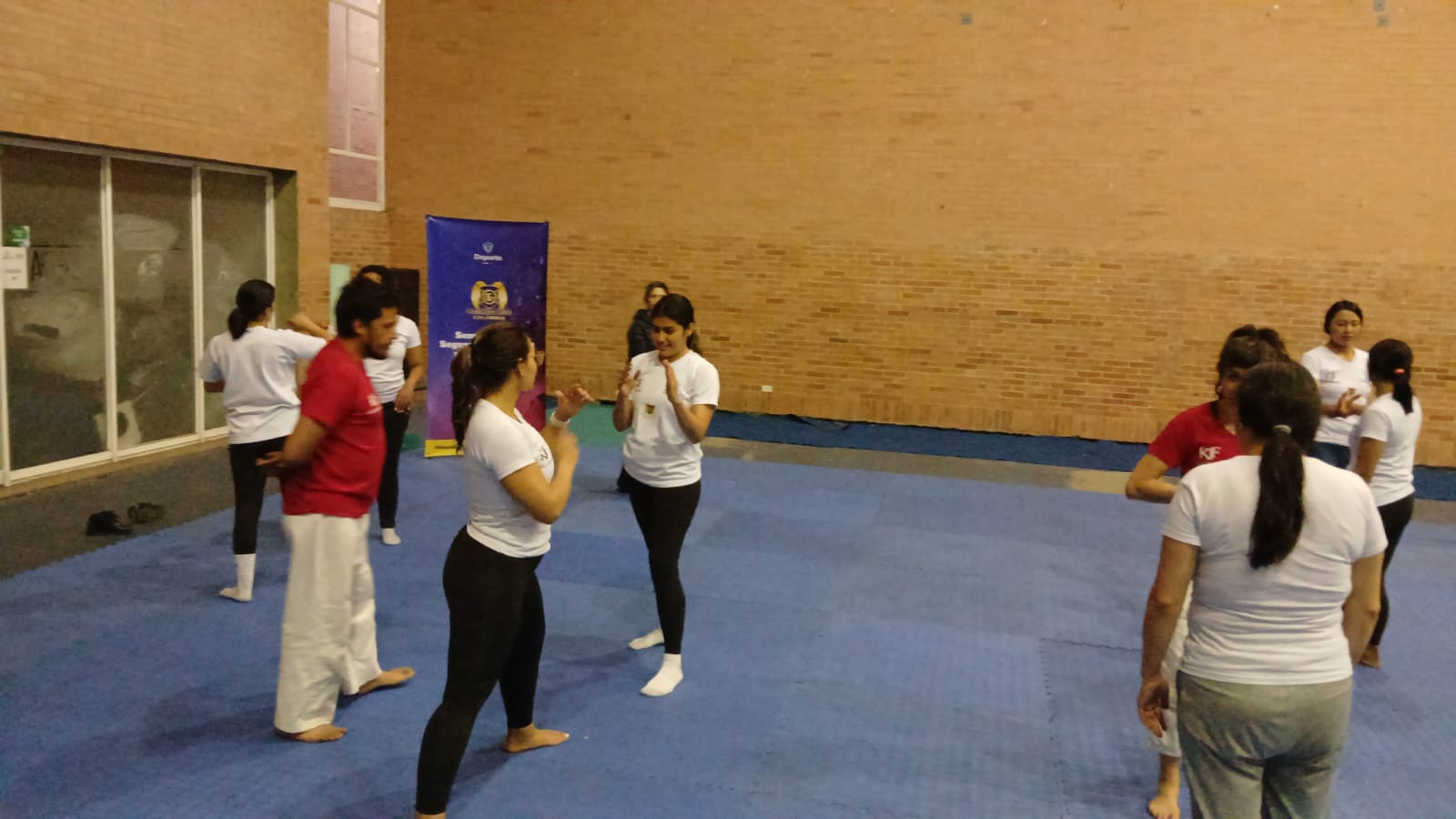
- National seminars and workshops led by certified female instructors
- Partnerships with national federations and ministries
- Collaborations with United Nations agencies for gender-based violence prevention
- Integration of local NGOs, community groups, and educational institutions
- Standardized training guidelines and safeguarding protocols jointly endorsed by GGI and JJIF
The project empowers participants to:
- Build self-protection and situational awareness skills
- Strengthen self-confidence and emotional resilience
- Engage in a supportive, respectful, and safe community
- Become advocates and leaders for gender equality in their societies
Through GGJJ, GGI and JJIF aim to create a global movement where Ju-Jitsu becomes a powerful tool not only for sport, but for safety, empowerment, and social change.
OBJECTIVES
- Advance Shared Values: Showcase and promote the core values, culture, and mission of both GGI and JJIF through the GGJJ project, strengthening Ju-Jitsu’s global role as a martial art that empowers and uplifts communities.
- Address Violence Against Women and Girls (VAWG): Deliver accessible, inclusive, and culturally responsive self-defense training grounded in Ju-Jitsu principles to help prevent and respond to gender-based violence.
- Support Well-Being: Improve the physical and mental health of women and girls through a structured, holistic GGJJ curriculum designed for personal growth and resilience.
- Build Leadership and Confidence: Cultivate leadership skills, self-confidence, and personal agency among women and girls, both within the martial arts sphere and in wider society.
- Ensure Safe Learning Environments: Establish safe, supportive training spaces by incorporating gender-sensitive teaching approaches and strengthening capacity within National Federations.
- Promote Women Inclusion: Encourage equal participation and representation of women and girls in all aspects of Ju-Jitsu—training, competition, leadership, and governance—within JJIF’s global structures.
What is Ju-Jitsu?
Ju-Jitsu—also spelled Jiu-Jitsu or Jujutsu—is a traditional Japanese martial art with more than a thousand years of history. Born on the battlefields of feudal Japan, it was developed by the samurai as a way to survive when weapons were lost or unusable. Rather than relying on brute strength, Ju-Jitsu taught warriors to overcome opponents through technique, leverage, and strategy. Its guiding principle is timeless and elegant: “Use your opponent’s energy, not your own.”
Historical Roots
From its earliest days, Ju-Jitsu was shaped by Japan’s warrior culture. When samurai faced danger without armor or weapons, they needed a method of self-defense that worked against larger or stronger foes. Over generations, different schools refined their methods, studying how the body moves and where it is vulnerable. Techniques such as throwing, joint manipulation, immobilization, and pressure-point control became the foundation of the art. These teachings later inspired the creation of modern martial systems including Judo, Aikido, and the various forms of Brazilian Jiu-Jitsu practiced around the world today.
Modern Sport Ju-Jitsu
As Ju-Jitsu spread beyond Japan, it evolved from a battlefield survival system into a global sport practiced in more than 120 countries. Today, the Ju-Jitsu International Federation (JJIF) oversees this modern form, recognized by major international sports bodies. The sport features several disciplines, including the Fighting System, Duo System, Self-Defense System, and Ne-Waza (Ground Fighting). Even with this evolution, the heart of Ju-Jitsu remains unchanged. It is more than a martial art—it is a path that cultivates awareness, confidence, emotional resilience, physical strength, and deep respect for oneself and others. Practitioners learn not only how to protect themselves, but how to stay calm under pressure, move with purpose, and carry themselves with humility and discipline.
Ju-Jitsu and Social Impact
Beyond competition and tradition, Ju-Jitsu has become a practical tool for social change. In many countries, it supports public safety programs, youth development initiatives, and violence-prevention efforts. For women and girls especially, Ju-Jitsu offers a transformative set of skills—practical methods to escape danger, the confidence to assert boundaries, and the empowerment that comes from mastering one’s own body and mindset. This is the spirit embraced by Guardian Girls International (GGI). By integrating Ju-Jitsu into its global mission, GGI uses the art not only to foster gender equality but to safeguard women and girls from violence, helping them build safer, stronger communities where they can thrive.